
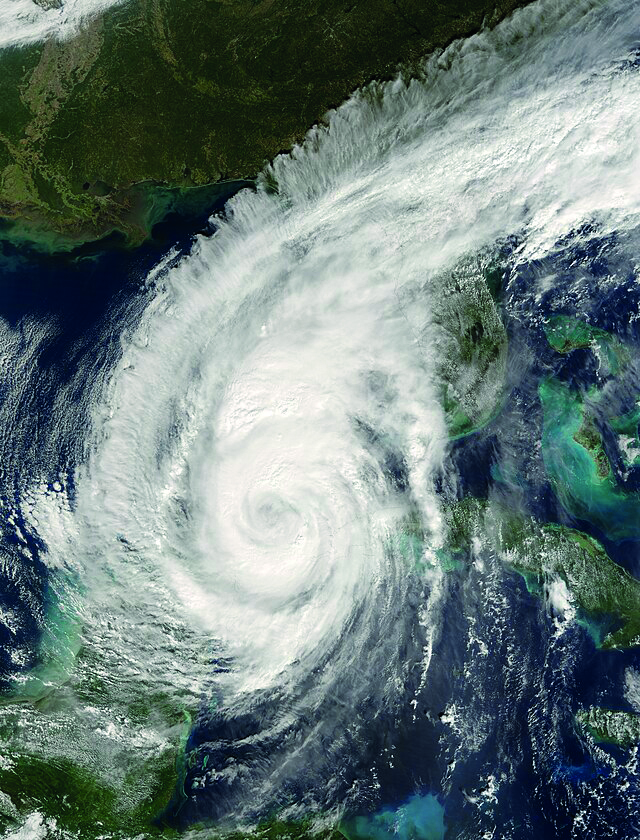
The 5th of October marked an electrifying day as the 50th anniversary conference was held for TORRO, the Tornado and Storm Research Organisation. TORRO are a self-funded research body serving the national public interest. Documenting and publishing hail, lightning, snowfall, temperature, and tornadic weather phenomena since 1974, the work undertaken by the organisation has helped to provide over 50 years of integral insight on weather systems and events in the UK and Ireland. And, you heard right: tornadoes do happen in the UK, with around 30-35 in an average year.
Held at the University of Reading, there were 13 impressive presentations throughout the day exploring the history, achievements, and recent supercell activity. Here are some of the highlights:
- The TCO, TORRO and 100 years of Thunderstorm reporting: some epic thunderstorm episodes
2023 has certainly been a record-breaking year. Jonathan Webb explained that this September broke the near 50-year record of the most days of thunder in an area, with Reading having 7 days of thunder. But this is not the only impressive event in the database of storms over the past 100 years. The storm episode of 1936 occurred over 3 days, with over 600 to 700 incidents of lightning damage reported across Britain and Ireland. On the 10th and 11th of June 1970, 111 millimetres of rain crashed down in Gloucestershire within 90 minutes, with the Wiltshire storm of August, 1975 peaking with 140 lightning strikes occurring in just 5 minutes.
2) The November 1981 tornado outbreak
TORRO has a huge database found within its archives. Since 1091 there have been historical records of over 4000 tornadoes and waterspouts. The archive also documents information on giant hail, whirlwinds, ball lighting, coastal storm impacts, and lightning injuries. Regarding November 1981, Mike Rowe explained that 104 tornadoes occurred in this 6-hour outbreak. Beginning in Anglesey, North Wales, the storm swept through the country and left at the Essex coast. This number came from around 30 press cutting agencies, around 35 appeals, and 38 to 39 accounts from individual newspapers. However, reassessment of this outbreak has been undertaken with a revised estimate of between 58 to 90 tornadoes.
- The remarkable Jersey tornado and hailstorm of 1 November 2023
Last year Jersey was hit with a devastating tornado occurring in a supercell thunderstorm associated with Storm Ciarán, which left 150 people homeless and 3 people hospitalised. Sarah Horton explained that the estimated strength of this tornado was rated on TORRO’s T-scale as having T6 damage, with winds of 161-186 mph. The storm entered Jersey with a 500m wide path, throwing a vehicle over 25m, and twisting metal 5m long around a tree 500m away. Matt Clark explained that the tornado formed close to the cold front, and through an organised line of convection a supercell formed. This formation contains a rotating updraft, called a mesocyclone, and created the conditions for the tornado to occur. The radar data captured from this tornado marked the first tornado debris signature (TDS) to be observed in northwest Europe.
Paul Knightley, the current Head of TORRO, talked on the importance of having these conferences and the future for TORRO. “They are a social thing,” he said, “it allows us to share ideas and create a form of outreach.”
For the future, Paul said that their focus would be on continuing to “record and publish information around our climate, and engage more young people to join.”
The next 50 years look very promising for TORRO, who will continue to publish information for the public. Being a volunteer with TORRO means you can help the team with site investigations, learn about the climatology which impacts you, and join a welcoming community.
Explore TORRO’s research and upcoming conferences here: https://www.torro.org.uk.
Photo Credit: Wikimedia Commons




Leave a Reply