
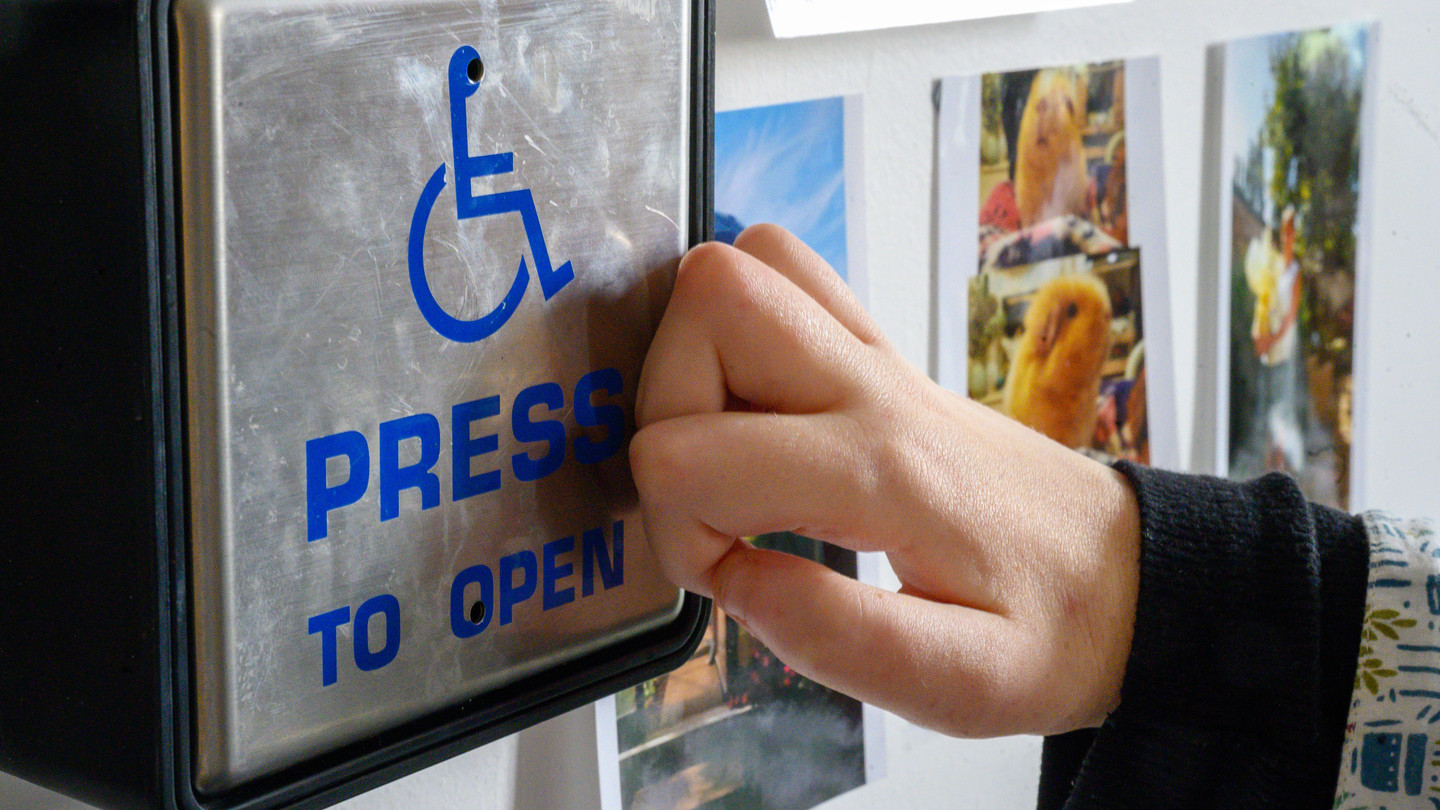
At UEA, many disabled students and staff still face barriers that make university life harder than it should be. For too long, disability has been viewed solely through a medical lens, overlooking the role that social and physical environments play in creating exclusion. This outdated perspective fails to address the deeper structural and cultural barriers that continue to perpetuate inaccessibility.
Last year, as part of an ethnographic research project under the DEV module, I collaborated with ENV undergraduate Amy Patterson to explore these challenges. Through interviews and multiple group discussions, we gathered first-hand experiences from participants, using group mapping techniques to highlight key accessibility issues across campus. We worked closely with Access All Areas, a UEA working group focused on improving accessibility, and later presented our findings to help inform efforts to make the campus more inclusive.
Many disabled students and staff still feel their needs are seen as secondary. As Katherine had shared, “It is really hard to push back against this stuff. We are regarded as asking for special treatment, for making unreasonable expectations, and for asking for too much.” Another participant put it bluntly: “When people talk about equality, the first things that come to people’s mind is race, ethnicity, and sexuality and disability is sort of pushed to the bottom of the list if it’s even mentioned at all’.
We faced constant frustrations throughout our research, from having to reroute due to broken lifts, to hearing stories of the daily anxieties disabled students face. One participant described the “constant worry” of wondering, “Can I get to this room? Is it accessible?” Jodie also reflected on the added challenges, stating, “It’s kind of annoying that getting to the centre of campus is so difficult. I’ll literally only go there if I’ve got a friend with me because I know if one of the routes isn’t accessible, I’ll have someone who can help me up the slopes.”
Today, the university faces the challenge of enhancing accessibility within the constraints of it’s 1960s architecture, which was not designed with inclusivity in mind. UEA’s significant financial difficulties make funding accessibility improvements even more challenging, raising tough questions about how the institution can prioritise inclusion amid hardship.
UEA has the option to bring about change, especially with the Lasdun Wall development. While the New Science Building sets a strong example of what accessible design can look like, achieving the same standard for the Lasdun Wall will require secure processes that ensure disabled voices are actively included in shaping and refining its infrastructure.Without this, there’s a risk of repeating previous mistakes where accessibility was treated as an afterthought.
I must note that despite these difficulties, it’s also incredibly important to acknowledge the positive steps already taken. The Estates team have been notably proactive and responsive in addressing inaccessibility issues, showing that with the right commitment, meaningful change is possible. By building on these efforts, UEA can create a campus where accessibility is embedded in every decision and not treated as a temporary fix.
Image Credit: UEA



Leave a Reply