

‘You have to start. There is no point planning and plotting and waiting for the right moment, you just have to start doing it. Second piece of advice, you have to finish, you cannot publish an unfinished book.’
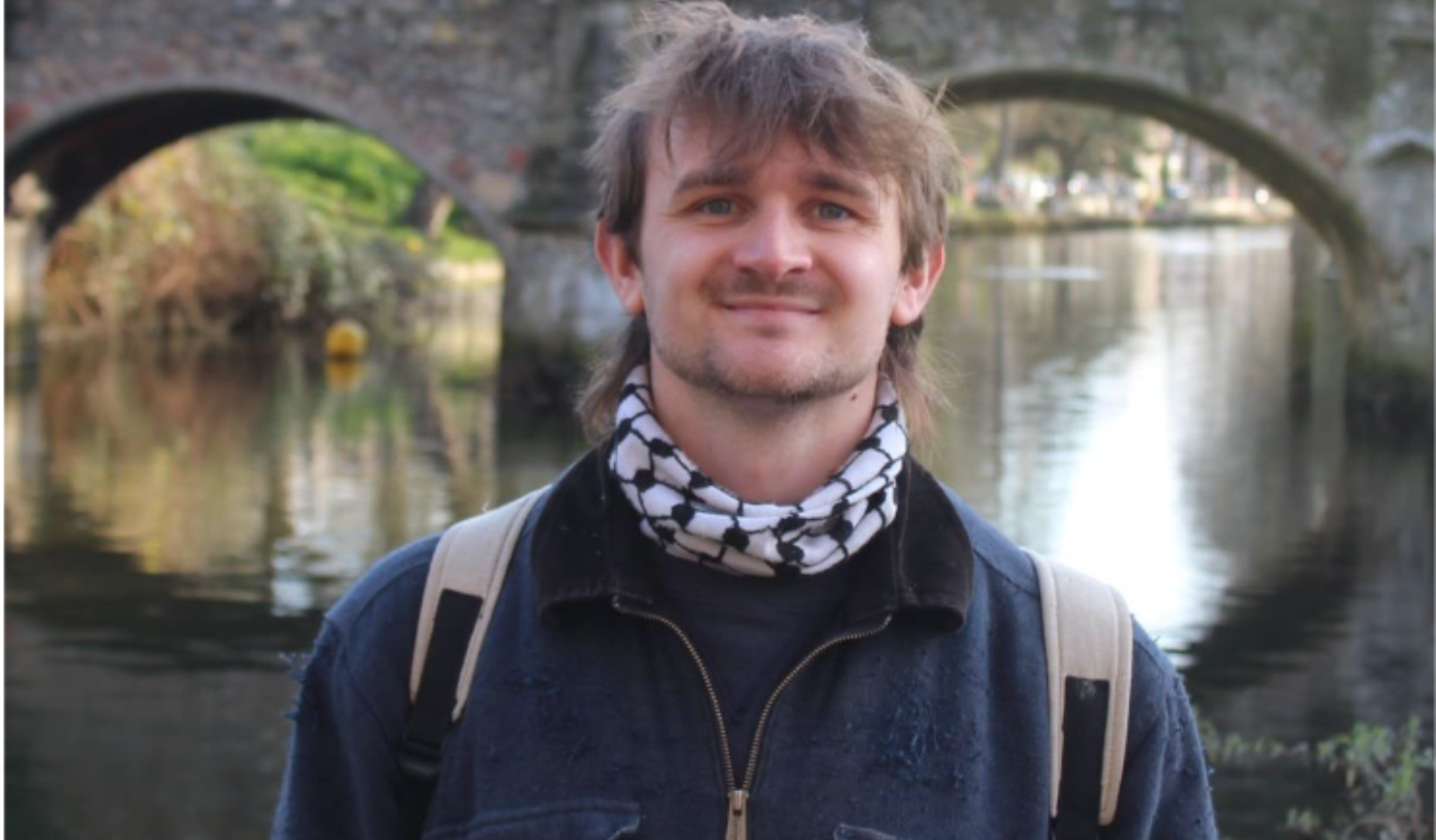
It’s a cold October morning when I call Jay Neill from Norwich. I am sitting at my desk and he’s sitting at his, in his home in the South of England. I have called to talk about his debut novel, The Terminus of All Things.
Anyone who has followed Jay’s TikTok, knows that this is a project he has been working on for a long time. There he has detailed his journey from the writing of the first draft all the way up to publication.
TikTok has been crucial to Jay throughout the writing of his novel, in fact he says it has ‘Been the most fun part of the whole thing.’ He found an unexpected community there, ‘The reasons that people or authors go on TikTok is because they think they’re going to sell books.’
Jay tells me, ‘everyone tells them you have to. You have to start six months before your book comes out. And that’s the only way you’re going to use it, to sell books.’ For Jay however, purely chasing people to buy his book wasn’t what he found most important, but rather the community he built from receiving real-time feedback from other people also on the same journey.
In one of his TikTok’s Jay says that D, a tale of Two Worlds by Michael Faber, was the main inspiration for his novel, or rather he thought he could write something better than it. It was inspiration for him, ‘not because I like it,’ he tells me now, ‘I don’t think it’s very good. But there are some brilliant ideas in there that I thought needed somebody to write them, write them better.’
When I asked him about the other novels that helped inspire his world building, he told me about The City & the City by China Melville. Melville uses a vagueness of time period, and has the protagonist introduce this alternative world, which inspired Jay to write his own alternative world ‘Endland’.
There is little exposition in Melville’s book and Jay wanted to do the same, ‘as the reader you discovered Endland at the same time that Jack was discovering it.’ This pulls the reader in, like Jack, as they are forced to make sense of a new world from the fragments they understand.
When I ask him the all-important question: How do you write a debut novel, in particular, as an indie author? He takes a moment to think. ‘Number one piece of advice is you have to start. So there’s no, planning and plotting and waiting for the right moment to do it. You’ve just have to start doing it. Second piece of advice, you have to finish, you cannot publish and unfinished book. So you have to force yourself to get through it.’ Jay is focused on getting things done.
He tells me about his family holiday where he originally wrote the first chapter. ‘It was a really wet holiday,’ he remembers, ‘So I had these two or three hours every day where nobody was doing anything, and suddenly found I’d written five, six chapters.’
The world of self-publishing is far more complicated than it seems, ‘although everyone says we’re not competing with each other, really you are. You know, you’re all trying to create a cover that is more attractive than the other cover that’s going to be next to it when you’re browsing through Amazon.’ But Jay doesn’t forget the community that he found.
Even though no one fully knows the perfect steps to self-publish a book, they are all eager to help each other out. ‘You just have to ask a question and you will get 30 people weighing in with their opinion about what you should do.’ Whilst the act of writing a book is a solitary task, it is clear, that to Jay, this is where he has found community. He has invited people into his world, and in return he has been invited into theirs.
Image Credit: Jay Neill




Leave a Reply