
Political violence has no set definition. There are many acts – some shocking, some alarming, some sobering – that could all apply to the term. Some high-profile examples of political violence from across the world include the assassination attempts on Donald Trump in the lead up to the US Presidential Election in 2024, and the death of right-wing influencer Charlie Kirk in Utah.
Political violence can be seen and spread online faster than ever. For the examples of Trump and Kirk, raw, unedited, candid footage of the events themselves spread before the news broke on mainstream media stations. They amassed millions of views.
The new, accessible nature of political violence often leads directly into wider outcry. Conspiracy theories sprout from baseless claims that are repeated in thousands and thousands of comments. By the time a genuine political motive is verified, many people have already come to their own conclusions and use mainstream media only to justify the spread of hatred.
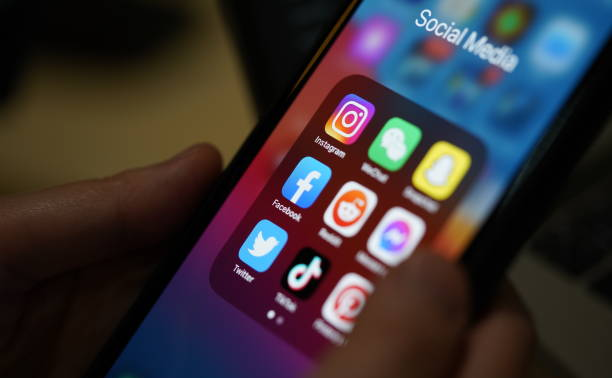
Platforms such as X (formerly Twitter), Facebook and TikTok are designed to maximise engagement by feeding users content aligned with their interactions. If a person watches a video depicting police violence against protesters, they are likely to be shown more of the same. Another user, who engages with clips portraying protesters as violent agitators, will be directed toward another narrative. Over time, people can become trapped in ‘echo chambers’ that heighten division. Each group perceives itself as responding to violence initiated by the other, and compromise becomes increasingly unlikely.
Exposure to graphic imagery, even when viewed remotely, can trigger stress responses similar to those experienced by people who are physically present. Feelings of helplessness or rage can drive individuals to more extreme positions, pushing them toward activism or, in some cases, radicalisation.
Selective editing, framing, and amplification to a base of supporters can turn a single violent moment into a defining symbol of an entire movement. When the U.S. Capitol was stormed in January 2021, images of broken windows and rioters in the Senate chamber dominated headlines and social feeds. For some, this was proof of a dangerous attack on democracy. For others, it was portrayed as an act of resistance against a broken system.
Even acts that don’t immediately have a political motive can become political violence because of how they’re perceived by the public. In July 2024, seventeen-year-old Axel Rudakubana killed three children and injured ten others. Although the motive was unknown, conspiracy theories and unsubstantiated claims spread like wildfire across social media sites, and nationwide anti-immigration protests followed for weeks. Eventually, it elicited a response from Prime Minister Keir Starmer, and highlighted the public’s dislike of Labour’s immigration policies, which had only come into effect less than a month prior to the killings.
I’m a journalism student, so as you might expect, political violence appears in my line of work all the time. Whenever I am posting something on X, or even a news appeal on Facebook, the first dozen or more recommended posts can range from anti-vaccine claims and conspiracy theories about high-profile politicians. This isn’t an algorithm I’ve cultivated on purpose, it’s genuinely what social media sites think my thoughts align with after working on political stories for two years. I’ve seen in real time how comment sections from trusted sources like 10 Downing Street or Associated Press get filled with baseless and untrue ‘alternative facts’ and poorly-made memes created with the sole purpose of spreading hatred and extremist views. I find it extremely worrying, and it has definitely gotten worse. I’m actively bookmarking the most outrageous posts I come across, and there is sometimes a humorous angle in just how outrageous some people’s writings are, but I definitely feel like if I wasn’t trained to be impartial, these posts would find their way into my subconscious and change my world view somehow.
When it comes to political violence, some communities rarely wait for facts. Instead, emotions power the first wave of responses, and those initial narratives – however inaccurate they are in reality – often stick. Once a particular explanation gains traction online, corrections or clarifications struggle to catch up. This creates a fractured environment where competing ‘truths’ coexist, and ‘alternative facts’ begin to form. This fuels hostility and deepens the divide between political factions.
What makes this cycle particularly dangerous is its self-reinforcing and regenerative nature. Outrage brings attention, attention fuels algorithms, and algorithms amplify outrage further. Political violence becomes an ongoing act that is consumed by millions and shaped into ammunition. Political violence will continue to divide and have a lasting effect until verification becomes as easy and effective as the spread of harmful content in the first place.




Leave a Reply