
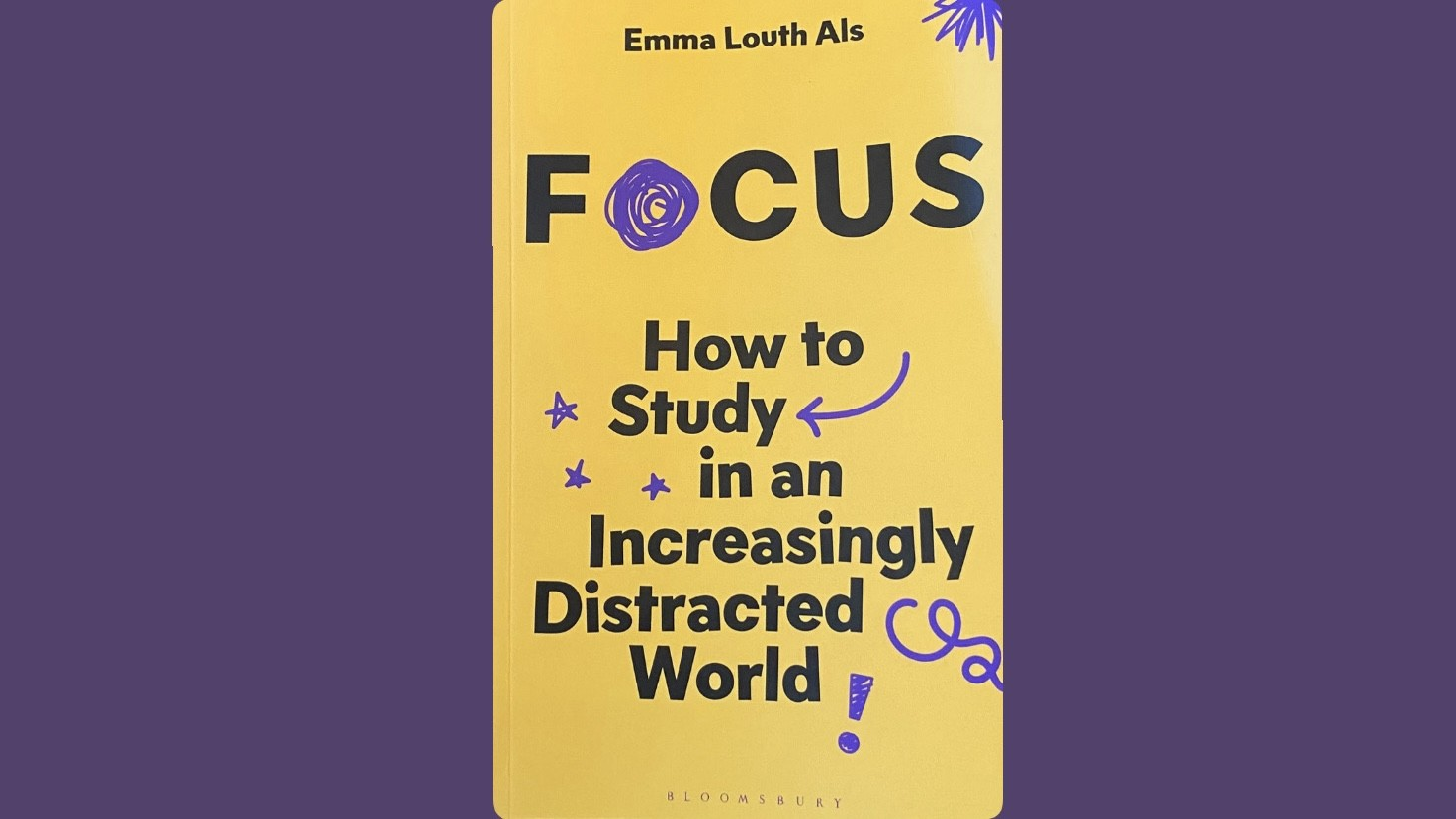
It’s January. Christmas has just ended to make way for exam season. It’s hard to get back into the swing of things, to exchange relaxation for studying, especially when it seems like everything is out to distract you. Your phone is always pinging; your family and friends are always running in asking questions and the temptation to doom-scroll social media is high. So how do you cope with this? Emma Louth Als breaks this down in her new book: Focus.
Using science and experience from her postdoctoral research, Als provides strategies for combating distraction and achieving a high-level of focus. Varying from lifestyle changes, highlighting the importance of sleep, nutrition and exercise, to thinking about how to create a distraction-free environment, Als goes beyond simple study technique suggestions. I particularly found the subject of “social jet lag” interesting. Als stresses the importance of keeping a regular routine, for example, not sacrificing sleep in the week to make up for it at the weekend. This results in “social jet lag,” making you far less productive overall.
This book is also great at tailoring to the university experience. It is aware that this might be the first time students are living away from home, as well as considering what living situations they might be in, particularly thinking about ways to utilise space to separate study from social or relaxation time. Als suggests switching bed study, and all its comfort, for desk studying or the library, allowing you to both get a better night’s sleep and be more focused when you come to study.
It is also accommodating to different student experiences, giving advice to mature students and how they can battle the distraction of family and children. She provides the guidance of being selective about when to choose to study, namely after children go to bed. This allows for a window of distraction-free study time that will result in far better productivity than hours studying spent being constantly interrupted.
This book inspired me to try out the Pomodoro technique, a time management method that breaks work into 25-minute periods, followed by a 5-10 min break, to keep sustained focus for longer. It also had me trying to fit in more exercise, even if small bursts, to my routine to improve concentration. It was greatly motivating and made achieving something quite daunting much more manageable. The “try this” sections were also great ways to get started thinking about the ideas of a chapter or reflecting on your current study habits and what changes could be implemented. Focus is a brilliant way to start the new year fresh, guiding you through the ways to make your studying far more effective and achieve better results.
Image Credit: Lilia Colledge (Book cover designer: Jade Barnett)





Leave a Reply