
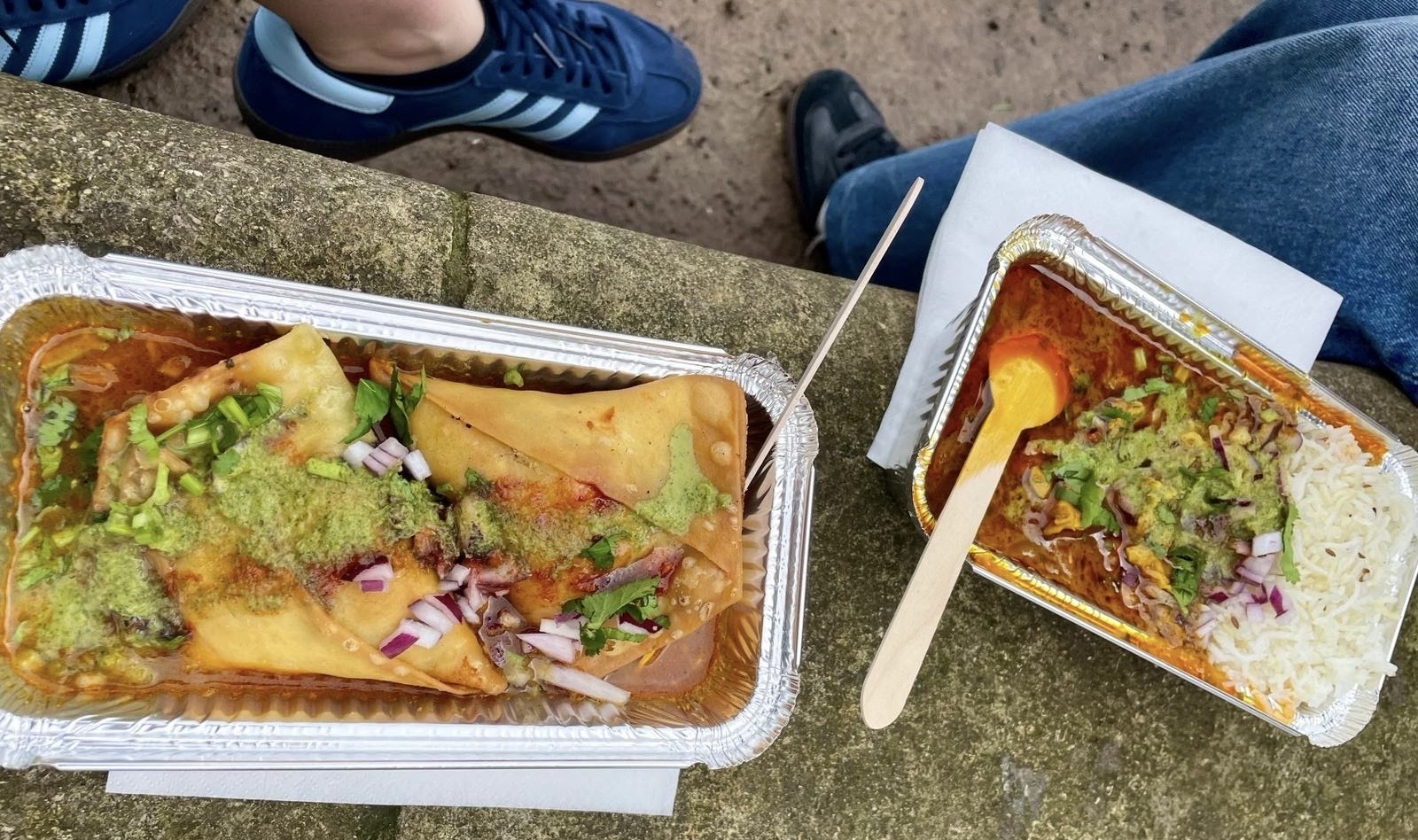
I was lucky enough to grow up in a household where food was very much at the centre of family life. Not a day would go by when, like clockwork, all mechanisms, all moving parts within those four walls would produce a breakfast, a morning coffee, a lunch, an afternoon tea, a dinner and a bit of chocolate in the evening. It was only as I got older, that I started to realise that my idea of home as some kind of manic feeding cuckoo clock was actually quite mistaken. Somehow, all along, it had been my mother. Never was this made more clear than when I left for university and the community aspect of food came, not in the eating, but in the cooking. Each evening, I stand in a small galley kitchen with my housemates, as I try to recreate the food of my childhood with precious little success. All that matters is that we turn over the day’s events, with a lot more love and care than I give to the slightly runny anchovy pasta that my mother told me was easy to make.

It should be recognised that food is potentially one of the greatest forms of unification that we have. Its necessity for the continuation of human life makes it a common point of interest for everyone, regardless of gender, class or nationality. Without wanting to wax lyrical about it, food is and has been the main instigator of social interaction for thousands of years. With the development of human settlements, shared mealtimes became a significant part of creating community as well as installing culture and hierarchy within groups. It is food’s ability to both create and share culture that makes it the perfect vehicle for developing empathy and nuanced understanding within an otherwise divided time. Surprisingly, perhaps one of the most intriguing examples of the potential for unity through food can be found within the much mocked British cuisine.
In the culinary sense, Britain has often been referred to as a ‘magpie’. It has flown the globe and has taken all that it deems to glisten, whilst being fiercely protective over the right to call these dishes and ingredients their own. This violent colonisation from 1583-1997, as well as the invasions of Britain by the Romans and the Normans, has led British cuisine to become one of the most heavily influenced in the world. Take the quintessential bottle of ketchup for instance; the national sauce of the UK. Despite it being an integral part of the British Fry-Up, the sauce actually originated in imperial China and was made of fermented fish. When the British came across the sauce in the late 17th/early 18th century during their colonisation, they decided to bring it back to Britain and severely alter the recipe. With only descriptions of what it tasted like and no recipes to follow, the Western world was provided with something a little closer to what we now recognise as ketchup.

There is no doubt a complex and painful history behind the majority of food that we consider ‘British’ today. However, what brings cause for celebration is not what Britain has taken, but what it has been granted. Since the end of the Second World War, Britain has seen an increase in immigration, with many nationalities bringing their own cuisines to the UK and enriching the food scene here. This can be appreciated to its full extent within the rise in Indian restaurants and takeaways, which has reached 18,000 within the UK (a 5900% increase since the 60s!). It is not surprising then that Britain’s most-loved dish has been consistently named the Chicken Tikka Masala. Although modified significantly for Brits, we can see the impact of Indian and international cuisine more broadly as something that makes Britain the vibrant nation it is today.

The culture of food at UEA can also be seen as a unifying force. Events such as ‘Go Global’ and societies like ‘UEA Cooking and Tasting Society’ promote an inclusive atmosphere where students are encouraged to share dishes from their own backgrounds, as well as food they believe others would enjoy learning about. It is this element of sharing, educating and respecting that, on a personal level, makes me so proud to be a student here. The fact there is no more typical activity for a UEA student than to share a BBQ down by the lake in the summer is something that speaks volumes about food and unity. It says that food can be a celebration of the ability of a wide variety of people to unite and that in doing so unites them further. And although I’m no longer sitting down in my childhood home six times a day to eat, food is and continues to be a unifying factor in my life and the lives of the communities at this university.
Feature Photo and Photo 1 credited to Fiona Hill. Photo 2 and 3 credited to Canva.




Leave a Reply