
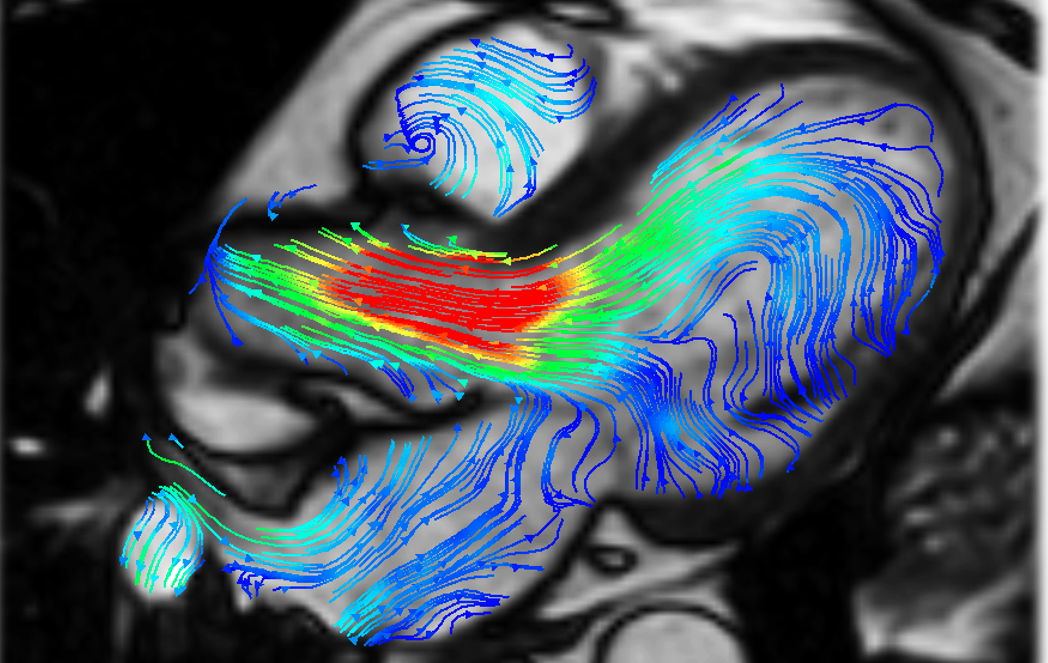
An exciting new MRI technique which accurately predicts risk of heart failure in the general population has been announced from within the UEA’s own Norwich Medical School.
The technique – using magnetic resonance imaging (MRI) to estimate heart pressure – has been the focus of previous research at the UEA, Leeds, and Sheffield, but with this study it is shown to predict heart failure risk in the general population.

Using artificial intelligence techniques, data was analysed from the MRI’s of 39,000 participants of the UK’s Biobank (a large-scale biomedical database), estimating the pressure in the heart, and using this to predict their chance of developing heart failure. Key risk factors for developing high heart pressure were identified as; age over 70, high blood pressure, obesity, male gender, and (unfortunately for most students) alcohol consumption.
The paper – ‘Risk factors for raised left ventricular filling pressure by cardiovascular magnetic resonance: Prognostic insights’ – was published in European Society of Cardiology Heart Failure on Monday 12th August, with the research being co-led by the UEA and Queen Mary University of London.
Dr Pankaj Garg, co-lead author of the paper, was kind enough to answer a few questions from our team.
At what moment did you realize you had a revolutionary technique on your hands, and how did you feel?
We invented the first equation to measure pressure inside the heart by the heart MRI in 2022. The realisation came when our previous studies showed that this equation had the power to predict outcomes in heart failure patients. However, at a general population level, we did not have the heart MRI data. Collaborating with researchers from Queen Mary University of London allowed us access to UK Biobank heart MRI data, and it was a thrilling moment to test it on 40,000 subjects!
What was the largest barrier you faced on the journey to the outcome of this research?
One of the biggest challenges we faced was managing and interpreting the vast amount of data from over 39,000 participants in the UK Biobank. This required sophisticated statistical methods and extensive computational resources. Ensuring the accuracy and reliability of our findings through rigorous validation was another hurdle, but it was essential to maintain the integrity of the research. Despite these challenges, the collaborative environment at UEA and the support from our interdisciplinary team helped us overcome these barriers.
I noted you have mentioned an interest in AI helping to better manage patients with heart disease – in your ideal scenario, what would this look like?
Imagine a future where diagnosing and managing heart conditions is as seamless as a medical diagnostic scan depicted in Star Trek. In this ideal scenario, AI acts like a sophisticated tricorder, instantly analyzing a patient’s heart health by integrating vast amounts of data—everything from detailed imaging and genetic markers to daily habits and environmental factors. This AI system would provide real-time, personalized insights, identifying potential heart issues long before they become critical. With these advanced capabilities, AI could not only predict and prevent heart failure but also enable doctors to create highly customized treatment plans, ensuring each patient receives the most effective care possible.
Why did you choose UEA as the place to conduct your research, and what would you say was the most useful part of the facility over the course of this research?
I was appointed a Senior Lecturer at UEA in 2020 and then Awarded my Welcome Trust Fellowship. This research involves the technical know-how we have pioneered and leverages its application in the UK biobank. UEA is uniquely positioned in the UK as a newer university which is catching up to established Universities in Medical Research. I think UEA has invested in younger scientists and researchers like myself, and this helps to nurture innovation, which was critical to the success of this research.
What will you be looking at next?
Our next steps will involve exploring how CMR-modelled pressure changes in the heart and other advanced imaging biomarkers can be integrated with AI to create predictive models that are even more accurate and personalized. We are also interested in expanding our research to include other populations and diverse demographic groups to ensure that our findings are applicable on a global scale. Additionally, we aim to investigate how these imaging techniques can be used not just for prediction but also for monitoring the effectiveness of treatments over time.
Finally, if you were to speak to the average student at the university, what is the number one thing you would communicate to them in order to protect their heart health?
The most important message I would convey is the significance of maintaining a healthy lifestyle from a young age. Regular physical activity, a balanced diet, and avoiding smoking are critical factors that can dramatically reduce the risk of developing heart disease later in life. I would also emphasize the importance of managing stress at every stage in career is key to preventing heart disease.
So there it is: until Star Trek becomes reality, the best bet is to maintain low-stress and a healthy lifestyle. Perhaps this is the year to join a sports club (while enjoying Wednesday nights responsibly!), to join one of the many food-related societies, or just to try and get through the year relatively unscathed. Either way, it’s exciting to know that heart failure is one step closer to being a thing of the past.
Photo credits to Dr Pankaj Garg





Leave a Reply