
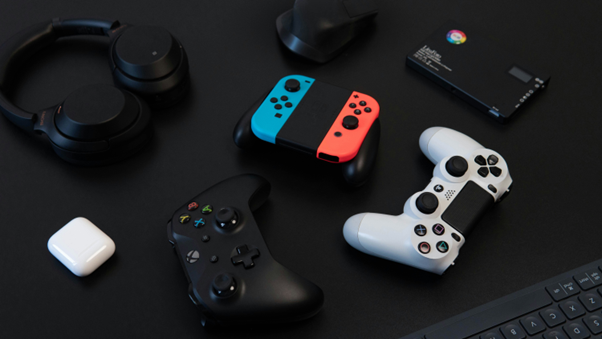
It’s 2 AM during exam week, and instead of sleeping before tomorrow’s test, I’m attempting the same boss fight in Elden Ring for the fifteenth time. My heart is racing, my palms are sweaty, and I’ve just hurled a string of profanities that would make my grandmother disown me. This is my idea of “relaxation.”
It’s a paradox that defines student gaming culture during summative season: when stress levels peak across campus, many of us gravitate not towards peaceful farming simulators or cosy puzzle games, but towards the most punishing, controller-throwing, rage-inducing experiences gaming has to offer. We choose Dark Souls. We choose Hollow Knight. We choose games designed specifically to break us. And, inexplicably, it helps.
The psychology behind this apparent masochism is more sophisticated than it first appears. When we’re drowning in academic stress, we’re confronting something nebulous and uncontrollable: deadlines that loom regardless of our readiness, material that refuses to click, and grades that could alter our futures. The stress is what psychologists call “chronic” and “uncontrollable.” We’re passengers in our own academic disasters.
Then we boot up a punishing game, and something shifts. Suddenly, the stress becomes acute, immediate, and crucially, conquerable. When you die to a boss in Sekiro, the feedback is instant and clear. You mistimed the parry. You got greedy with that extra hit. The game isn’t gaslighting you with subjective grading criteria or moving goalposts. It’s brutally honest: you weren’t good enough, but you could be. Next attempt, you’ll be better.
This transformation from helpless to agent is intoxicating. As my friend Ciaran notes, “academic stress is more severe as it has more life consequences, video games, while stressful in the moment, don’t mean anything.” That lack of real-world consequences paradoxically makes the stress useful. It’s stress with a safety net — what researchers call “eustress,” or beneficial stress that energises rather than depletes.
The difficulty creates what psychologist Mihaly Csikszentmihalyi termed “flow states”; that absorption so complete that hours evaporate and your exam anxiety quiets to a whisper. When you’re focused on dodge-rolling through attack patterns, there’s no mental bandwidth left for catastrophising about your summatives. The game demands total presence, and in that presence, we find relief.
But here’s where it gets darker: we often choose the most rage-inducing games precisely when we’re already in the worst moods. Failed a practice exam? Time for the nightmare difficulty of Cuphead. Got a brutal critique on your essay? Let’s boot up Getting Over It with Bennett Foddy, a game literally designed to make you suffer.
There’s a twisted logic here. When everything feels broken, we seek experiences that match our internal chaos. Gentle, forgiving games feel dishonest when we’re raging inside. We need something that validates our fury, that says “yes, this IS hard, and you SHOULD be frustrated.” Then, when we finally overcome it — even if it takes fifty attempts — we’ve transformed that shapeless academic rage into something with a resolution. We’ve taken our anger and sharpened it into a weapon that actually kills the boss.
Yet this isn’t universal, and that complexity matters. When I asked Ciaran about his gaming habits during exam season, he offered a different perspective: “Usually it is FIFA or sometimes shooter games with my friends,” he explained. “If anything, I choose an easier game because it is less to think about.” For him, gaming during stress isn’t about mastery or conquest — it’s about cognitive escape. “Because it takes my mind off the task that is stressing me out, video games are a stress reliever because they are a distraction.”
This reveals something crucial: we’re all managing the same stress, but our coping mechanisms diverge based on what we need. Some of us need to feel competent when academia makes us feel inadequate. Others need to stop thinking entirely. Ciaran admits the darker side of this strategy: games “also amplify stress when you think about the time you wasted.” That procrastination guilt is real, especially when the easier games fail to provide catharsis: “I feel quite deflated because I think I can’t even do my work or beat this easy game, what the hell can I do?”
For Ciaran, achievement isn’t the draw: “I don’t find games that difficult to be honest, the fun isn’t about achievement.” But for those of us seeking out Soulsborne games during summative season, achievement is precisely the point. We need to prove to ourselves that we can still accomplish something, even if that something is defeating a fictional dragon rather than understanding thermodynamics.
The truth is that gaming during high-stress periods is rarely about de-stressing in the conventional sense. It’s about stress transformation. We’re not eliminating stress; we’re transmuting amorphous academic dread into focused, conquerable challenges. We’re not relaxing; we’re reclaiming agency. And when we rage-quit at 3 AM, controller in pieces, we’re not de-stressing at all, we’re externalising internal chaos, making the invisible visible, turning feeling like a failure into an event we can point to and say: “There. That’s why I’m upset.”
As Ciaran admits, “I do it all year round as a way to relieve stress or, unfortunately, to procrastinate.” Whether we’re chasing mastery or seeking distraction, whether we choose Dark Souls or FIFA, we’re all just trying to survive summative season one game at a time. Sometimes that means conquering impossible odds. Sometimes it just means not thinking for a while.
Either way, we’ll probably still fail that 9 AM exam.
Image credit: Venson Chou on Unsplash



Leave a Reply